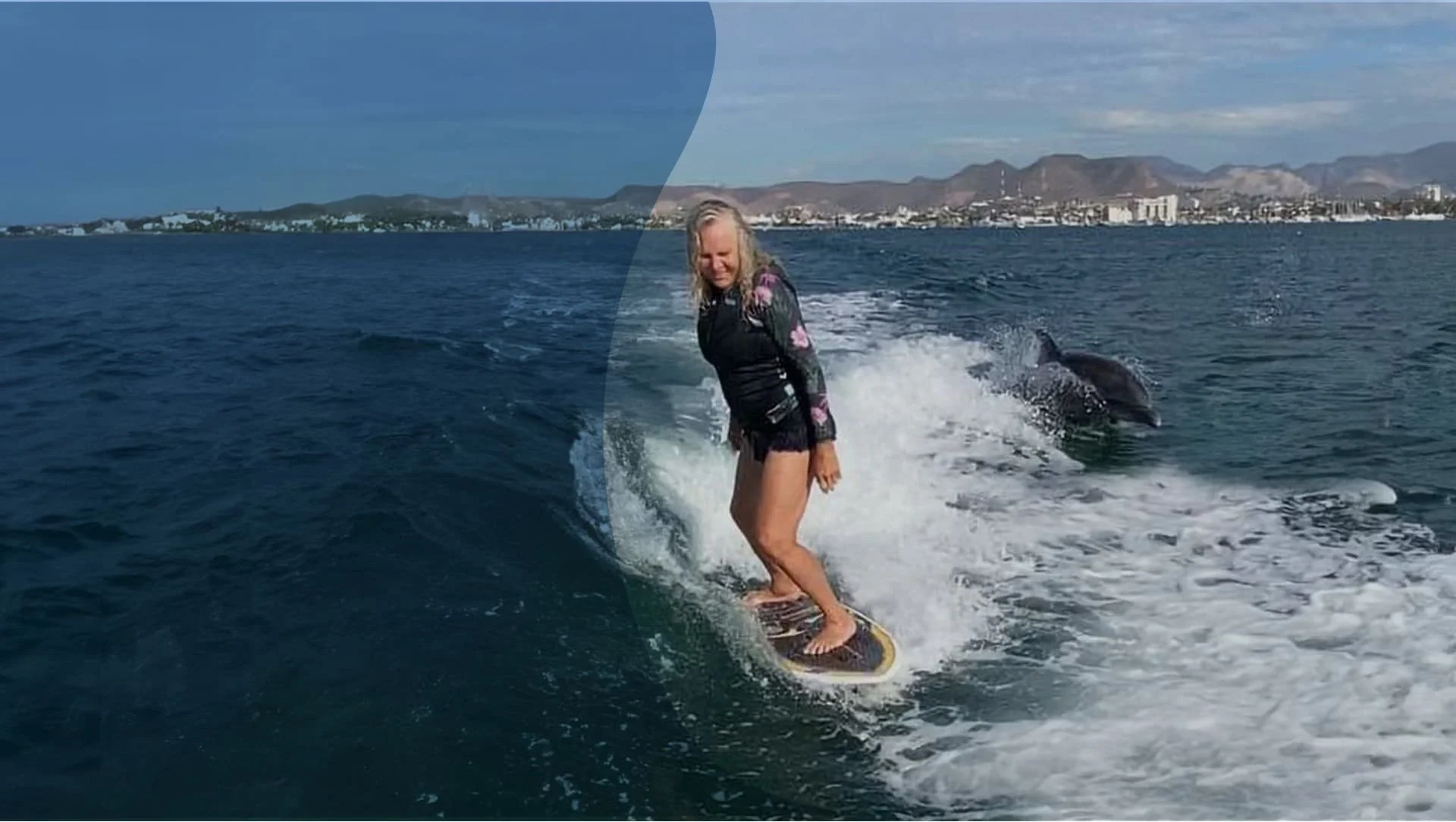
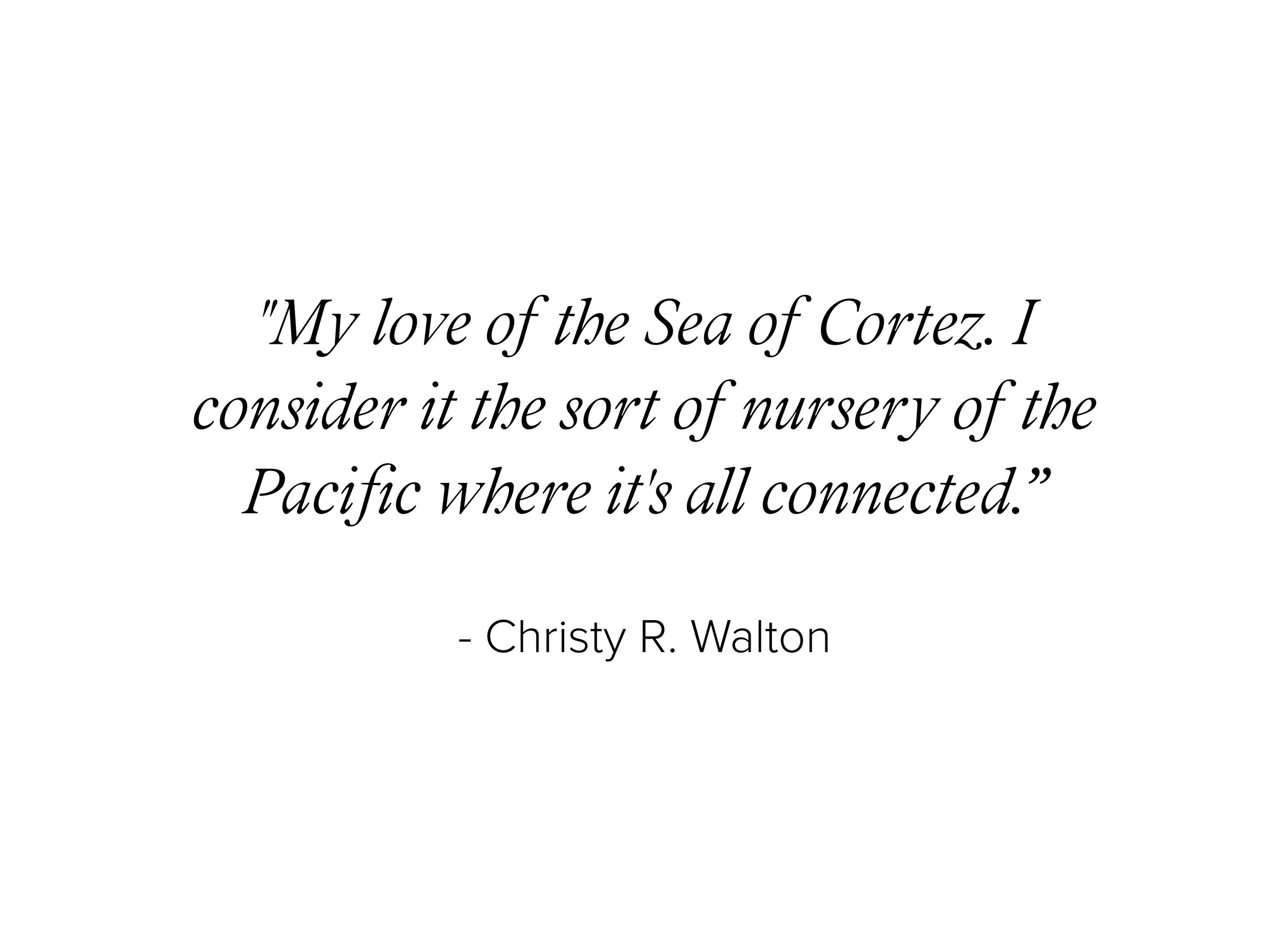
Christy’s love of the ocean and her deep understanding that the health of our planet is inextricably linked to the health of our ocean drives her commitment to developing generative and regenerative relationships between the ocean, its biodiversity, and coastal communities. The focus is on bringing back biodiversity and abundance to one sea at a time.
Read more...
Christy has long supported ocean restoration and biodiversity, working with Pronatura Noroeste, Comunidad y Biodiversidad, CIBNOR, UABCS, Niparaja, Scripps Institution of Oceanography, the NAT, US Fish and Wildlife, Institute of the Americas, International Conservation Fund (ICF), Legacy Works Group, Conservation International, OPRE, NOS, Santomar, and the University of California research system, among many others. Their efforts in community, ocean-based economic development, and ocean health have helped shape opportunities and establish scientific baselines for marine and coastal habitats of the Gulf of California.
Christy has also pursued innovative solutions to food production through aquaculture and the reduction of overfishing. Through collaboration with communities, government, and NGOs, Christy helped develop multiple fishing refugios between Bahia Los Angeles and Cabo Pulmo. These protected zones are intended to restore biodiversity, replenish finfish and shellfish stocks, and support fishing communities.
With 80% of the world’s fisheries depleted, negative environmental outcomes, and animal health hindering aquaculture adoption, Christy pursued extensive partnerships and investments that resulted in the development of submersible offshore aquaculture systems, farmable warmwater finfish species, finfish and shellfish genetics advancements, and species with resistance to climate change. The aquaculture systems are demonstrating a generative ecosystem benefit by creating safe zones for wild fish, while producing jobs and enabling year-round diversified fish production for the market.
To accelerate the advancement of technology and farming techniques, Christy co-founded Cuna del Mar. The portfolio of vertically integrated aquaculture companies is pioneering submersible offshore farms, underwater feed systems, advanced hatcheries, fish tracking, genetics research, vaccines, and sustainable feed solutions.
The farms are demonstrating possibilities and practices that can underpin viable business models. A pioneering Cuna del Mar project, Santomar, is the only finfish farm cultivating Totoaba (an endemic species) and Red Snapper (Huachinango). Partnering with CONAPESCA and SEMARNAT, Santomar has released over 270,000 Totoaba, aiding population recovery.
Sol Azul, part of Santomar, farms oysters in the Vizcaino Biosphere Reserve and San Ignacio Lagoon. With CIBNOR, it has bred virus – and heat – tolerant oysters, ensuring sustainable aquaculture. Santomar also produces oyster seeds, including endemic Crassostrea corteziensis, and works to expand bivalve farming for restoration and economic benefit to communities in partnership with NOS, CIBNOR, Marimex, and others.
Since 2012, Santomar has employed over 250 people and created more than 500 indirect jobs. In partnership with UABCS, it offers Marine Biology students hands-on training, fostering the next generation of ocean stewards.
Being a part of Rancho Corte Madera, a 4,000-acre ranch within the Cleveland National Forest near San Diego, Christy began her first erosion control works. She saw how overgrazed land degraded, how cattle/goat/sheep allowed to remain in riparian areas damaged them, how trails became gullies, and how animal management, land, and water are deeply intertwined. She began to create structures to retain sediment, restore pastures, and to use electrical fences to protect the riparian areas. She saw positive results as the land and water became stable.
Read more...
She saw similar issues across the Baja California peninsula: the same decomposed granite, the overgrazed and eroded landscapes, depleted aquifers, loss of canopy, and loss of rain. She found that fragile ecosystems disappear because of unplanned, and unregulated development pressure. She also saw potential — an opportunity to apply her continued scientific interests and her understanding of land and water stewardship to restore Baja’s dryland environments and its water and improve the quality of water going to the sea.
Christy has long focused on the intersection of ocean and land in coastal ecosystems. Along with Tim Means, Fundación Manuel Arango, Fundación Mexicana para la Educación Ambiental (FUNDEA), World Wildlife Fund, The Nature Conservancy, and Marisla Foundation, she and John supported the creation of Parque Nacional Archipiélago de Espíritu Santo and the designation of 243 islands in the Gulf of California as a UNESCO World Heritage Site. She also helped establish protected areas like Bahía de Los Ángeles, Islas Marías, and Playa Balandra to ensure community access to the sea.
To restore the watershed and biodiversity of Sierra Cacachilas, Christy’s team developed varied erosion control systems, creating water retention that feeds the aquifers, livestock management, and (re)generative agriculture. Today, scientists from the United States Geological Survey, as well as regional universities and institutions, are conducting ongoing research on aquifer recharge, biodiversity abundance, and land restoration, reinforcing these conservation efforts with data-driven strategies.
Regenerative ranch practices have also supported sustainable economic growth. Through Rancho Cacachilas, Christy has fostered jobs in quality food production, eco-tourism, and farm-to-table dining. She continues to champion (re)generative agriculture, supporting research on resilient crops, soil health and vitality, and water conservation, ensuring long-term sustainability for local communities and ecosystems.
Christy has always believed that when people feel connected to and understand the nature of a place — its history, biodiversity, and traditions — they can become its fiercest protectors.
A strong advocate for the arts, Christy contributed to public spaces in La Paz, a sea-facing city, including some of the first sculptures along the Malecón. She also supported the establishment of pocket parks and community gardens for open space for people to experience a connection to food and place in the city. She believes that an appreciation for history and the environment creates deeper community participation and responsibility.
Read more...
To support the economic transition of the historic mining town of El Triunfo while honoring its past, she and her team established Museo Ruta de Plata and MUVACA, preserving its mining legacy and celebrating the regional ranching culture. Since its opening, MUVACA has welcomed nearly 42,000 visitors and engaged over 14,000 youth in educational programs. In 2025, a new natural history museum celebrating the Baja California Peninsula broke ground with support from the community and researchers from SUVA Research, @Lab, Centro para la Biodiversidad y Conservación Marina (CBMC), Pronatura Noroeste, UABCS, and the San Diego Natural History Museum (The NAT).
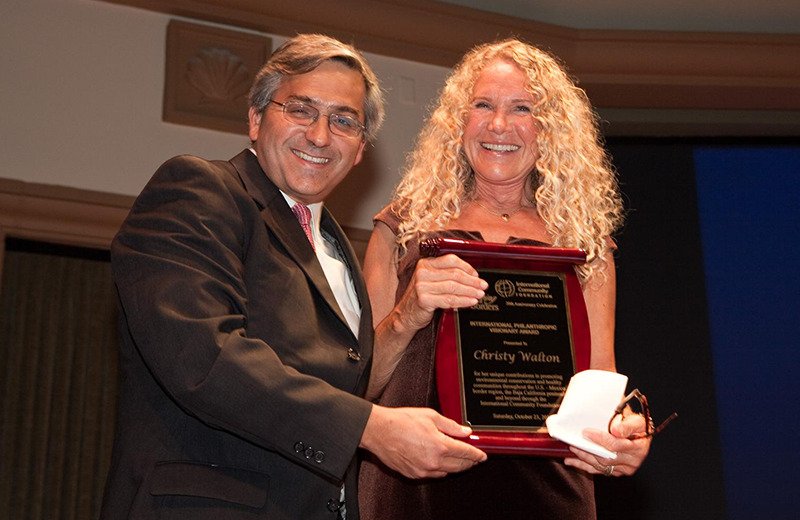
The decades of research by scientists from the USA and Mexico and her engagement with The NAT led to the creation of the Baja Expedition exhibit hall, which includes the Christy Walton Gallery in recognition of her contributions to museum expansion, binational collections expeditions, and binational educational initiatives.
Beyond museums for learners of all ages, Christy also supports the next generation in their learning and connection to science, technology, engineering, the arts, and mathematics (STEAM). In 2024 alone, 50% of children aged 6-14 in El Sargento, La Ventana, Los Planes, El Triunfo, and Ancon participated in STEAM educational activities. With AbraPalabra, she invested in children’s libraries, the first of which were housed in the business offices of Tenaja. She also helped launch an Ecology Project International (EPI) chapter in La Paz, providing high school students with hands-on science and learning programs.
Christy’s passion for building resilient communities stems from the people she has met — fishers, artisans, and educators — who embody perseverance. She believes that strong communities require access to education, healthcare, and economic opportunities to sustain long-term well-being.
Read more...
Beyond her focus on community resilience through her work in Ocean Vitality, Land and Water Stewardship, and Sense of Place, Christy has also supported health, emergency relief, and infrastructure projects.
Health and nutritional education have long been a priority for Christy. She donated her family home in National City to Olivewood Gardens, where programs like The Kitchenistas focused on developing healthier traditional recipes for families. The success of the Kitchenistas led to two PBS specials, and notably, the daughter of an early participant later became mayor of National City.
In Baja California Sur, her partnership with the UC San Diego School of Medicine enabled the region to expand advanced medical training, allowing children with cancer to receive chemotherapy treatments in the state. She also contributed to the creation of Mexico’s second cancer registry and the Centro de Energia Renovable y Calidad Ambiental (CERCA), the organization based on the monitoring of air quality.
Concerned about the spread of dengue, Zika, West Nile, and other viruses caused by the Aedes aegypti mosquito, she and ICF brought the Wolbachia bacteria program to La Paz, causing a decline in the number of that particular mosquito and still providing almost 90% reduction in cases in the inner city. Her objective along with the state is to take this program to outlying communities so that they, too, have protection from this deadly virus.
Through collaborations with Fundación FEMSA, Cómo Vamos La Paz, and Banamex, Christy supported La Paz’s inclusion in the Inter-American Development Bank’s Emerging Sustainable Cities Initiative. This effort brought new financial resources and data-driven solutions to enhance urban mobility, climate adaptation, water management, and air quality.
During the COVID-19 pandemic, she, her family, Cómo Vamos La Paz, and other contributors, alongside community members, the navy, restaurants, and local businesses, helped feed 94,000 families in Baja California Sur. This effort laid the foundation for new organizations and the first food bank in the state.
Through these initiatives, Christy continues to foster social and economic resilience, ensuring that communities in Baja California Sur remain strong, self-sufficient, and prepared for future challenges.